
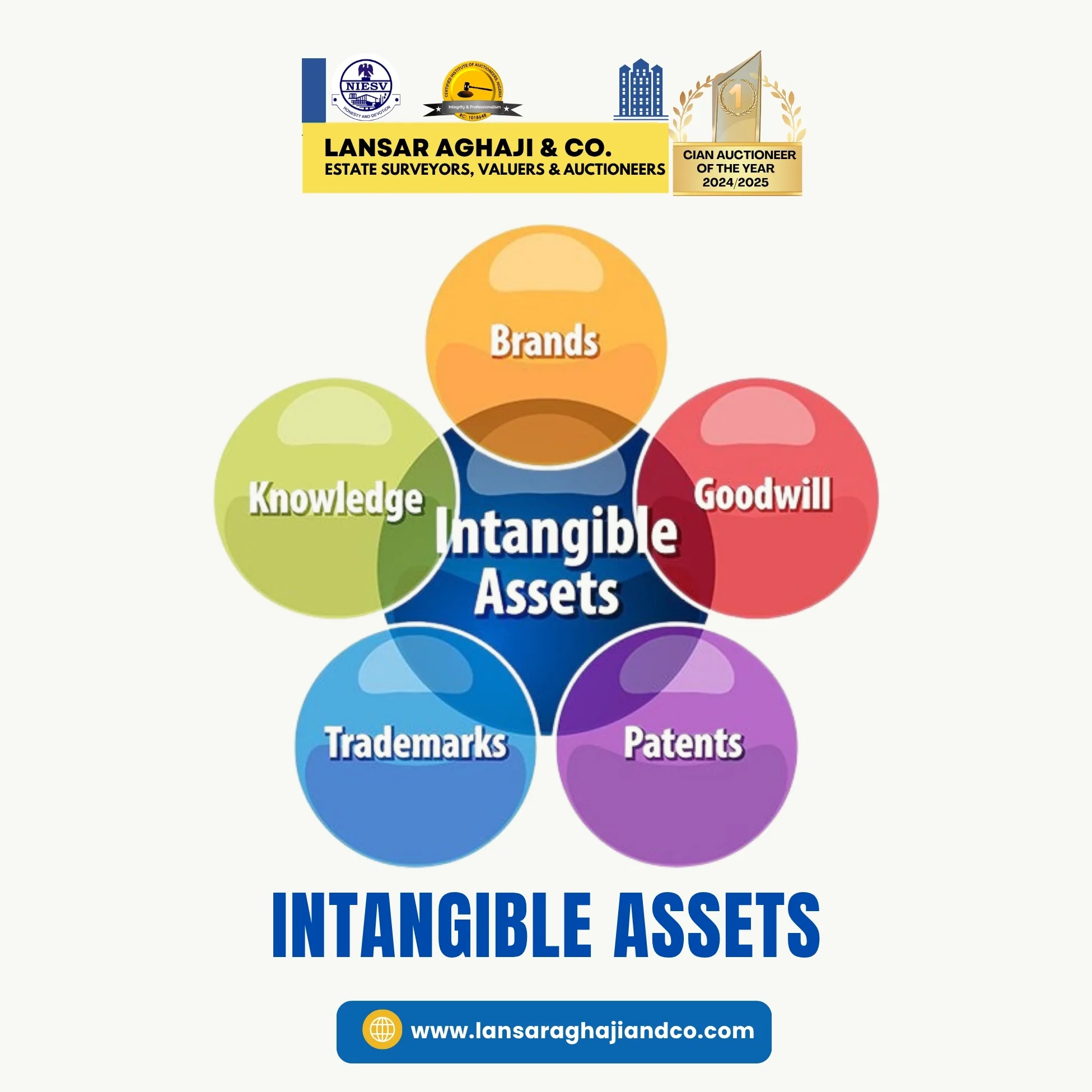
Value extends beyond physical assets; intangible assets like trademarks, patents, copyrights, software, brand reputation, customer relationships, and goodwill play a critical role in business success. Recognizing their worth is vital for owners, investors, and financial entities in making informed decisions.
Unlike physical assets, intangible assets can be difficult to measure because their value often depends on future earnings, market recognition, legal protection, and their ability to provide a competitive advantage. A company’s brand, for example, may attract loyal customers and generate substantial revenue even though it has no physical form. Professional valuation helps businesses estimate this economic value and use the information for investment, financial reporting, acquisitions, and strategic planning.
What Are Intangible Assets?
Intangible assets are identifiable non-monetary assets without physical substance that can provide economic benefits to an individual or organisation. Depending on the applicable accounting framework, an asset generally needs to meet specific recognition requirements before it can be recorded on a company’s financial statements.
Common examples of intangible assets include patents that protect inventions, trademarks that distinguish products, copyrights that protect creative works, and software developed for commercial use. Other examples include licences, contractual rights, certain customer relationships, and acquired goodwill arising from a business combination.
The value of intangible assets can vary considerably between businesses. A technology company may depend heavily on its proprietary software, while a consumer goods company may derive considerable commercial advantage from its brand identity. Recognising these differences is important when determining which assets require valuation and how their worth should be assessed.
Why Is the Valuation of Intangible Assets Important?
Valuing intangible assets helps businesses understand the resources contributing to their profitability and long-term growth. Without a proper assessment, organisations may overlook valuable intellectual property or misunderstand the financial implications of a proposed transaction.
For example, when one company acquires another, intangible assets such as patents, software, trademarks, and customer relationships may represent a substantial portion of the purchase price. A professional valuation helps determine the fair value of identifiable assets for relevant accounting and transaction purposes.
The valuation of intangible assets is also useful when raising investment, licensing intellectual property, restructuring a business, resolving certain disputes, or planning a sale. By understanding what these assets contribute, business owners can make better-informed decisions about protecting, developing, and commercialising them.
What Methods Are Used to Value Intangible Assets?
There is no single valuation method suitable for every asset. The appropriate approach depends on the nature of the intangible assets, the availability of reliable information, the purpose of the valuation, and the applicable professional standards.
The Income Approach
The income approach estimates the value of intangible assets by considering the future economic benefits they are expected to generate. These benefits may include additional revenue, cost savings, licensing income, or profits attributable to a particular asset.
One common method is the discounted cash flow approach, which estimates future cash flows and converts them into a present value using an appropriate discount rate. This approach is particularly useful when the asset’s expected income can be reasonably estimated.
For example, a software company may own a proprietary application that generates subscription revenue. A valuer could assess projected earnings associated with the software, consider operating costs and risks, and discount the expected cash flows to estimate its current value. The reliability of the result depends on the quality of the financial forecasts and the assumptions used.
The Market Approach
The market approach estimates the value of intangible assets by examining transactions involving comparable assets. Evidence may include licensing agreements, intellectual property sales, or other relevant market transactions.
For instance, if a business wants to value a trademark, a valuer may investigate transactions involving similar brands, considering differences in market recognition, geographical reach, profitability, and legal protection.
However, finding directly comparable transactions can be difficult because many intangible assets are unique and transaction details may be confidential. Consequently, valuers must carefully adjust available evidence rather than assume that another company’s asset provides an exact comparison.
The Cost Approach
The cost approach estimates the value of intangible assets by considering the cost of creating or replacing an asset with comparable utility, subject to appropriate adjustments.
For example, a business may have invested in developing an internal software platform. A valuer could examine the cost of development, including relevant labour, testing, and implementation expenses, and consider obsolescence or improvements needed to recreate the asset.
However, historical spending does not automatically equal current value. An expensive software system may have limited economic value if it is outdated, rarely used, or unable to generate meaningful benefits. The cost approach is therefore most useful when replacement costs provide a reasonable indication of value.
Factors That Influence the Value of Intangible Assets
Several factors determine how much intangible assets may be worth in the marketplace. Understanding these factors helps business owners protect their investments and appreciate why different assets receive different valuations.
Legal protection: Patents, trademarks, copyrights, and enforceable licences may strengthen an asset’s commercial value. The duration, scope, ownership, and enforceability of the relevant rights can affect the valuation.
Revenue potential: Intangible assets capable of generating consistent income or reducing operating costs may attract higher valuations when their future benefits can be demonstrated.
Market demand: Strong customer recognition, industry demand, and competitive advantages can increase the economic usefulness of certain intangible assets.
Useful life and obsolescence: Technology, software, and intellectual property may lose value when newer alternatives emerge. The expected period of economic benefit is therefore an important consideration.
Risk and competition: Changes in consumer preferences, regulatory requirements, competitors’ products, and business performance can affect the expected returns from intangible assets.
Can Artificial Intelligence Improve Intangible Asset Valuation?
How can artificial intelligence help professionals estimate the value of assets that have no physical form? AI-powered analytical tools can process financial records, examine market trends, analyse licensing information, and identify patterns that may support the valuation of intangible assets.
For example, AI may help analysts assess customer retention, forecast software subscription revenue, or compare large volumes of licensing agreements. These capabilities can improve efficiency and help valuers examine complex information more systematically.
Nevertheless, AI-generated estimates should not replace professional judgement. Incomplete data, inaccurate forecasts, legal uncertainties, and changing market conditions can affect the results. A reliable valuation of intangible assets still requires appropriate methodology, verified information, transparent assumptions, and professional review.
The Role of Professional Valuers
Professional valuers help businesses identify relevant intangible assets, examine supporting documentation, select appropriate valuation methods, and assess the assumptions underlying their estimates.
When valuing intangible assets, they may review ownership records, intellectual property registrations, financial forecasts, licensing agreements, market evidence, and the asset’s expected useful life. They also consider the purpose of the valuation because a financial reporting exercise may require a different analysis from a licensing negotiation or business acquisition.
Working with experienced valuation professionals helps organisations obtain a more defensible assessment and understand the limitations associated with their assets’ estimated values.
Conclusion
Intangible assets play a major role in modern business, influencing profitability, competitiveness, investment decisions, and long-term growth. Although they lack physical substance, their economic contributions can be substantial. The income, market, and cost approaches provide different ways to estimate their value, depending on the asset’s characteristics and the purpose of the valuation.
For businesses seeking to understand the worth of intellectual property, commercial rights, software, and other valuable resources, professional guidance is essential. Clients should reach out to Lansar Aghaji and Co., Estate Surveyors, Valuers and Auctioneers, for professional valuation advice and assistance in making informed asset-related decisions. A well-supported valuation can help businesses better understand their resources, manage financial risks, and identify opportunities for sustainable growth.